
Showing posts with label Kale. Show all posts

May 27, 2013

Garden Oddities

I've been collecting photos of odd flowers and vegetables for a while. I'm not sure why it never occurred to me to post some of them. So here's a post on "garden oddities". If possible, I'll have to make this a recurring topic (plus there are never-ending ugly tomatoes to share).


Unique foliage:

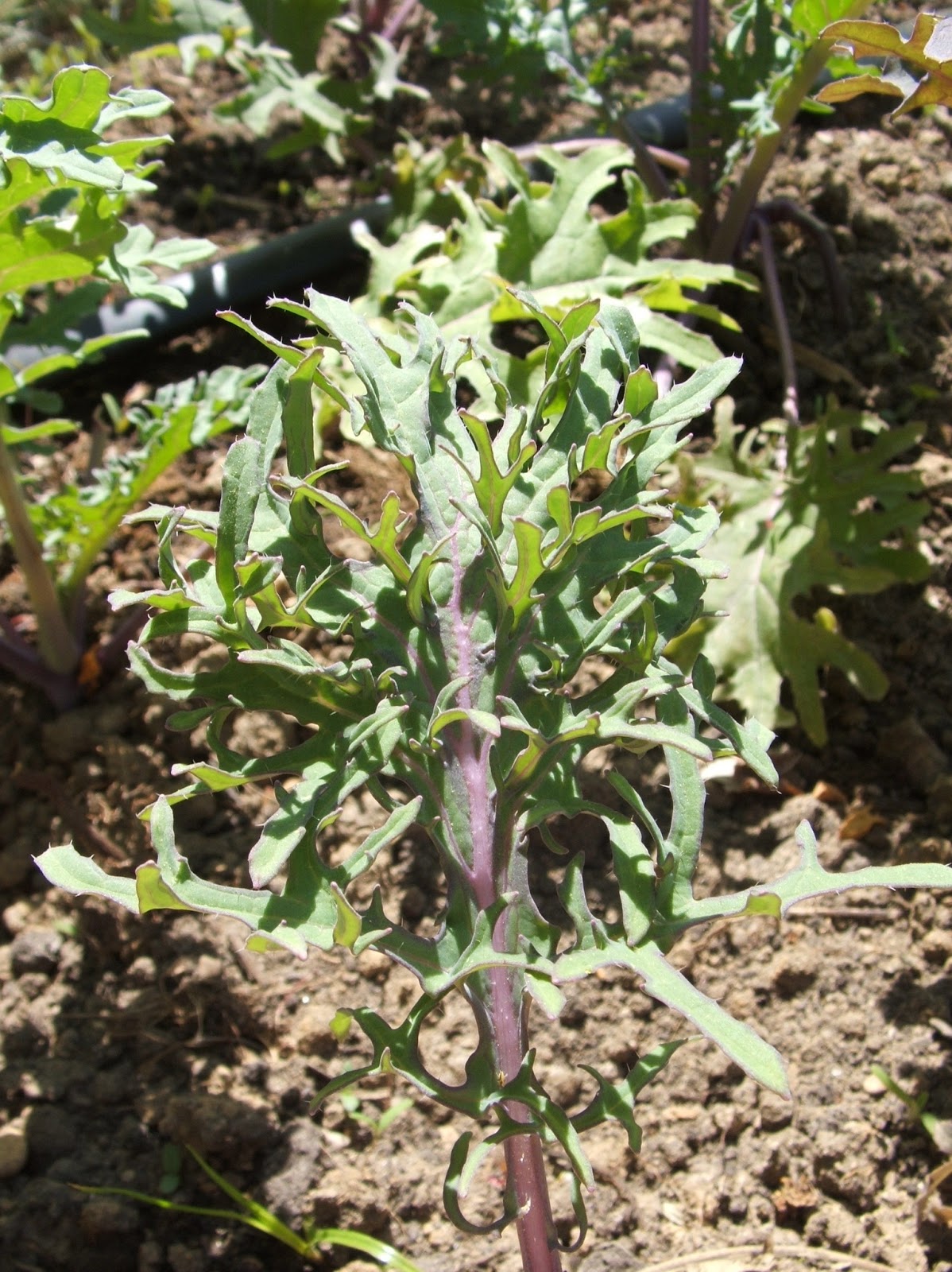
This is how Red Russian Kale leaves normally look:


I found this interesting specimen in the garden this spring. It seems to be extra frilly. I suppose I could save the seeds from this plant and see if it is a stable trait.


Albino plants:

The white leaf on this cucumber could be chlorosis, but it seems completely isolated to the first true leaf.

This snow pea came up completely chlorotic. It eventually died, but I'm surprised it survived long enough to develop as many leaves as it did.


Ugly Tomatoes:

This Japanese Black Trifele is naturally triangular shaped, but the blossom end of this one turned out particularly bizarre. It vaguely reminds me of the 'E Puribus Anus' school logo from the television show Community.


Although I love heirlooms, sometimes they're just a bit ridiculous. This particular fruit grew as several separate lobes all connected to the same stem. As you can see, the lobes are ripening at different rates. You'd have to do minor surgery on this thing before you could actually eat it.


Conjoined Tomatoes:

Here's another Japanese Black Trifele, but this time it has a strange growth near the stem end. 


This is perhaps my favorite odd tomato I've ever grown...because it looks like a red rubber ducky.


May 17, 2013

Salad Garden

I'm trying to put a little more effort into the salad greens portion of my garden this year. In past years, I have had so many volunteer lettuce seedlings pop up around the garden that I never had to intentionally plant any. However, after overhauling the garden this year, I wanted to start with a clean slate, which means no volunteers.

I'm trying several new salad crop varieties this year including 'Tom Thumb' shown in the foreground below. Tom thumb is a miniature butterhead lettuce. The idea is that you can harvest the entire head and it's enough for a single salad. Head lettuces can be difficult to grow in my area because spring is almost nonexistent (and this year was no exception).  They need cool weather in order to "head up" and our temps tend to jump straight from freezing to boiling. Even if these little guys don't make it to the table, they're adorable in they're own right.


I'm also trying frisee for the first time this year. This is a variety of endive that will grow into really wispy leaves, great for adding texture and bulk to salad mixes. My seedlings haven't started to take on the wispy growth yet, but they're still pretty young.


Another new variety, and possibly my most favorite new variety, is 'Ruby Streaks' mustard. It's peppery, texturey (is that a word?), and gorgeous!


I've devoted almost two whole (approximately 22' long) rows to what I'm calling salad crops this year including kales, endives, swiss chards, carrots, and lettuces. I attempted to plant them in alternating bands of green and red/purple-leaved varieties, so once they bulk up a bit, I think it will be really pretty.


Here's a better look at the drip tape I installed. There are little holes every 12 inches that drip water at a fairly fast pace. I only installed two rows of tape per 36" wide bed. So far it seems to be adequate.


I also plan on fencing in the salad garden this year. Last year the rabbits and squirrels got a little out of hand. While the fence won't keep the squirrels out, at least the rabbits won't be able to make a buffet out of my kale (below) and the rest of my salad garden.


September 25, 2012

Brassica Season

I'm helping teach a horticulture laboratory class one day a week and recently we went on a field trip to the MSU Student Organic Farm. I've gone on tours there probably a dozen times and I'm always learning something new and walking away inspired. They operate an 9-month organic farmer training program which trains people of all ages and background on everything there is to know about organic production (including veggies, cut flowers, honey, maple syrup, and livestock). In addition, they run a year-round CSA, an on-campus farm stand, and they even grow food for some of the campus dining halls.

During this particular tour, I was most impressed by their variety of brassica crops including:

Brussels Sprouts

Cabbage (or maybe this was cauliflower?)

Absolutely massive 'Kossak' kohlrabi

Beauty in shades of green, gray, and blue.

And lots of cabbage.

April 30, 2012

First Homegrown Salad of the Season


A mixture of baby lettuces, arugula, pak choi, kale, and mizuna. Yum!


June 20, 2011

Homemade Pizza with Garlic Scapes and Cooked Greens

I was really happy to find garlic scapes at the farmer's market. I've never tried them before and the garlic I grow is the wrong kind for producing scapes.

I decided to make a vegetarian pizza with cooked greens from my garden (including arugula, chard, kale, and spinach) and sauteed garlic scapes from the farmer's market.


I was never fed cooked greens as a kid because my parents hated them, but I think they're great (especially when sauteed with garlic).

While not super attractive, the pizza was garlicky, semi-healthy (as far as pizza toppings go) and very delicious.


April 4, 2011

Starting Brassicas

This weekend I started many of my brassica seeds. I sowed romanesco and calabrese broccoli, red russian kale, early white vienna kohlrabi, and mizuna. Last year, all of my broccoli seedlings were eaten soon after transplanting outside. Hopefully I'll have better luck this time. I have never grown kohlrabi or kale before, so I'm interested to see how it goes.

My pepper and tomatillo seeds from last weekend are doing really well (as are the swiss chard). I'm surprised each year by how tall and leggy the tomatillos are at first. They always seem too thin and weak, but I guess that's just how they look at first.

The green tomatillos were first to germinate, followed by the purple tomatillos, and then the sweet peppers.

The green tomatillos (hiding behind the sweet pepper tag) are so leggy. This seems to happen every year, so hopefully it's normal.

These swiss chard seedlings germinated in less than 48 hours! Hopefully they'll survive long enough to transplant outside.

Related Posts Plugin for WordPress, Blogger...